

Table / Island Length
Measure the full finished length of the table, island or breakfast bar.


Determine the correct chandelier diameter, length, drop and style for dining tables, kitchen islands, breakfast bars and open-plan entertaining spaces. Designed for luxury residences, villas, hospitality interiors and bespoke projects before lighting is selected, specified or ordered.

Project Information
If floor plans, kitchen drawings, table dimensions or reflected ceiling plans are available, upload them for review and the VORELLI® team can assess scale, drop, fixing position and chandelier style directly.
Measurement Guide
Use the guide below before calculating chandelier size. The most reliable recommendation comes from the finished surface length, surface width, ceiling height and intended visual centre.
Measure the full finished length of the table, island or breakfast bar.
Measure the finished width across the table or island, including stone overhangs if visible.
Measure from finished floor level to the finished ceiling or confirmed fixing point.
Use the finished tabletop, island worktop or bar counter height.
Drop is measured from the ceiling fixing point to the lowest chandelier component.
Centre the chandelier to the table or island composition, not only the room centreline.
Choose the closest table or island shape before using the calculator. Shape decides whether a circular chandelier, rectangular chandelier, linear pendant formation or bespoke layout will feel most natural.
This calculator provides an initial sizing recommendation. Final chandelier proportions should be reviewed against furniture drawings, joinery layouts, ceiling structure, suspension points and sightlines.
For private residences, villas, hospitality spaces and designer-led interiors, the strongest specification usually comes from matching chandelier geometry to the table or island shape, then confirming drop height against finished ceiling and surface levels.
Ordering Notes
Private Project Support
Share your table, island, ceiling height, drawings or finish direction and the VORELLI® team can advise on chandelier scale, drop, fixing position and style route.
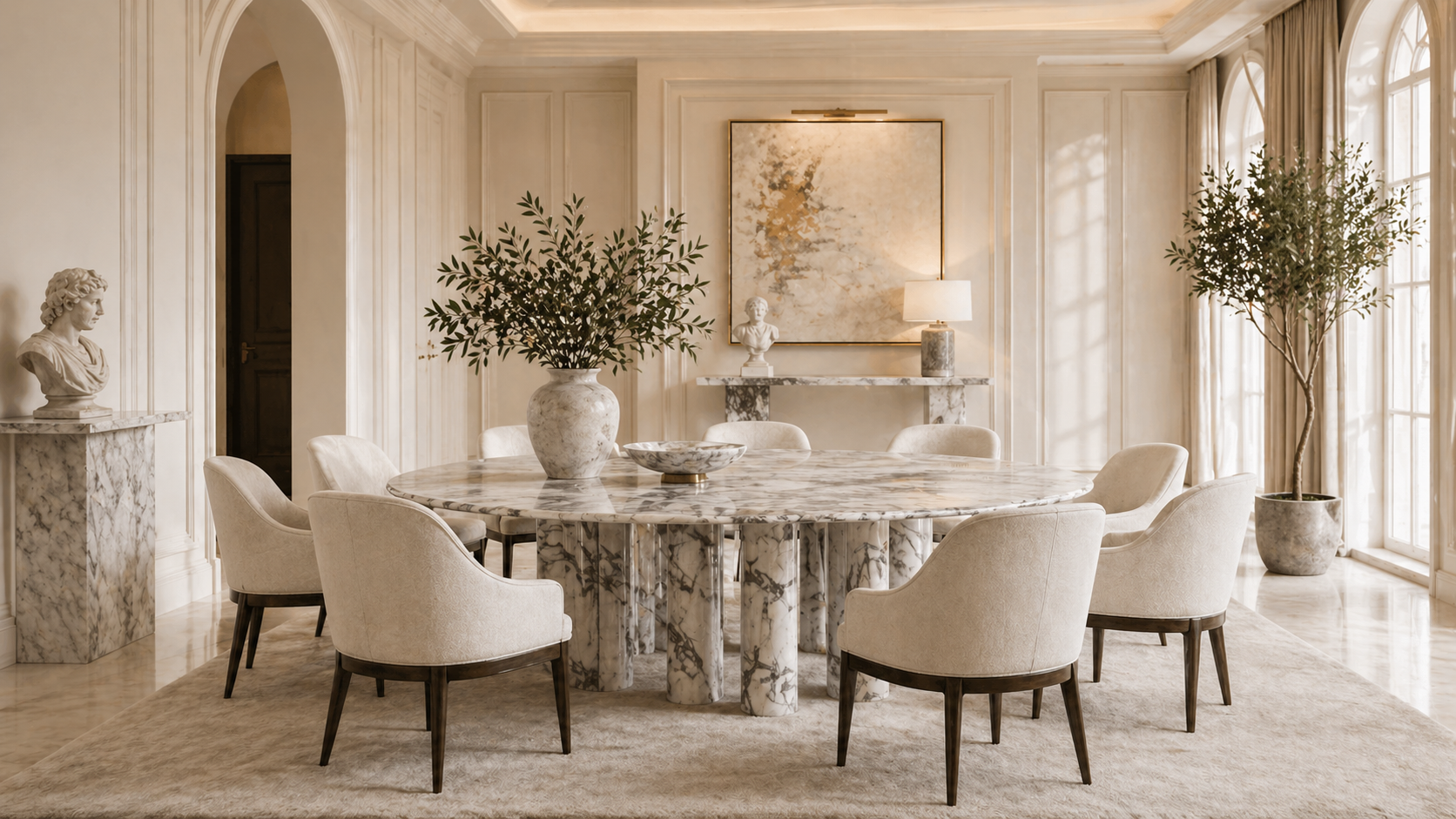
A reliable dining table chandelier size guide starts with table shape and length, not the room alone. Round and square tables usually suit circular chandeliers because the geometry feels balanced from every seat. Rectangular and oval tables typically need a longer chandelier or linear composition that follows the table length. Explore circular chandeliers and rectangular chandeliers.
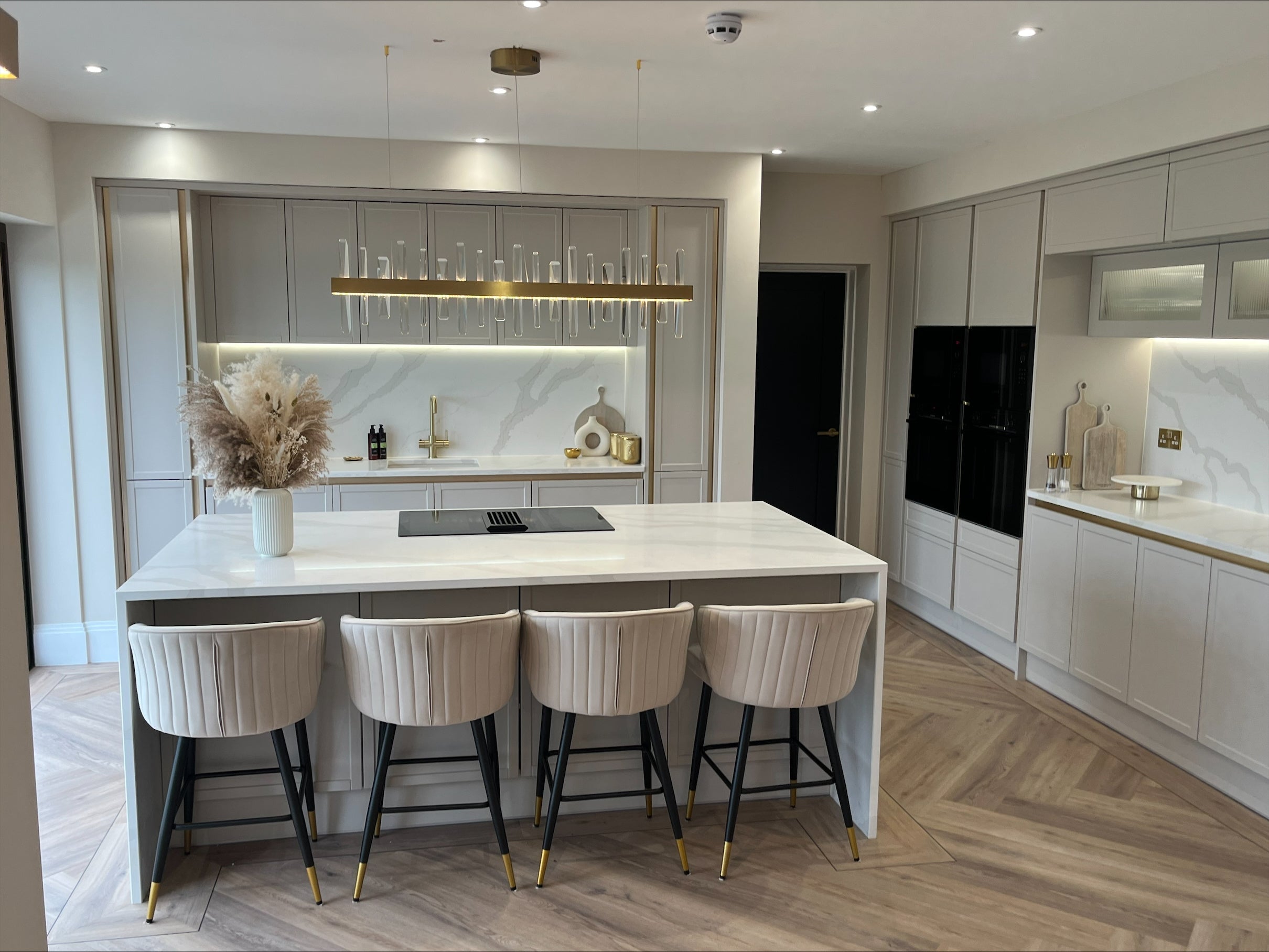
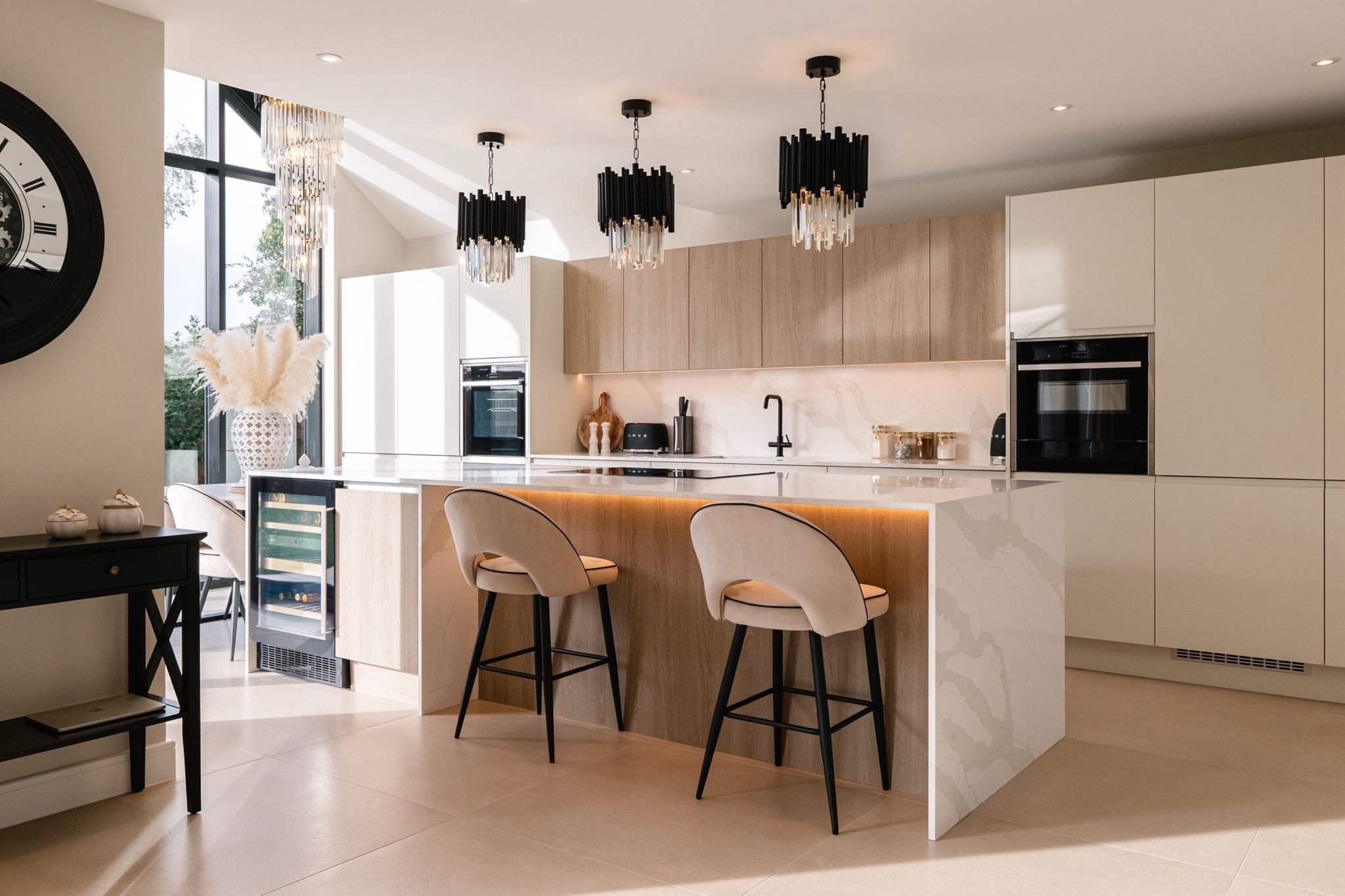
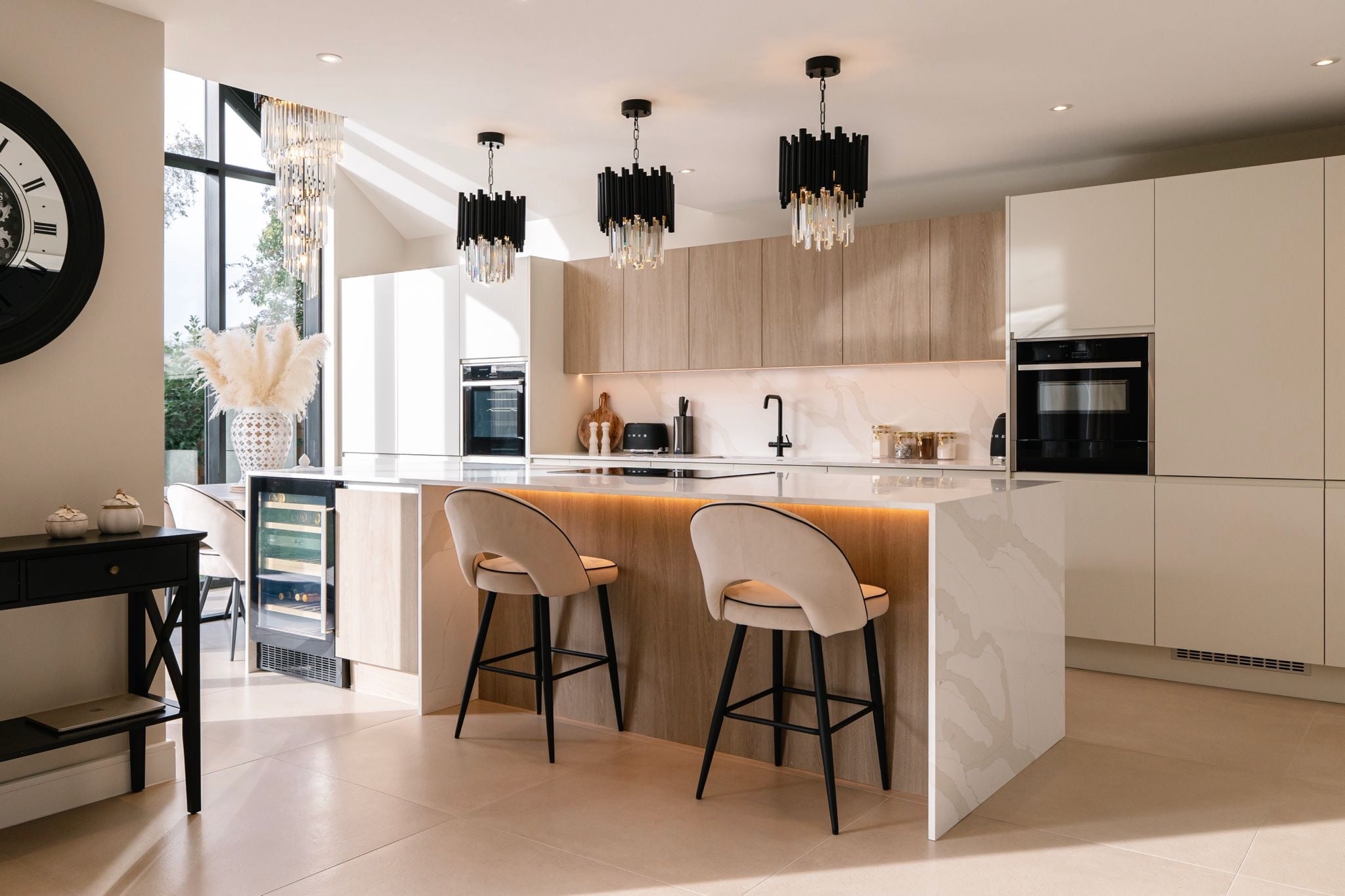
Kitchen island chandelier sizing should protect working clearance while giving the island enough presence. The length of the island sets the chandelier span; the island width controls visual depth; the ceiling height controls drop. Long kitchen islands often suit rectangular chandeliers, linear pendants or a considered pendant sequence. View luxury pendant lights for island-led schemes.
Rectangular chandeliers work best above rectangular dining tables, oval dining tables and kitchen islands because the fitting follows the primary axis of the furniture. A chandelier should normally sit inside the table or island edge rather than overhanging it. For luxury interiors, the best result is usually a measured span with balanced margins at each end.
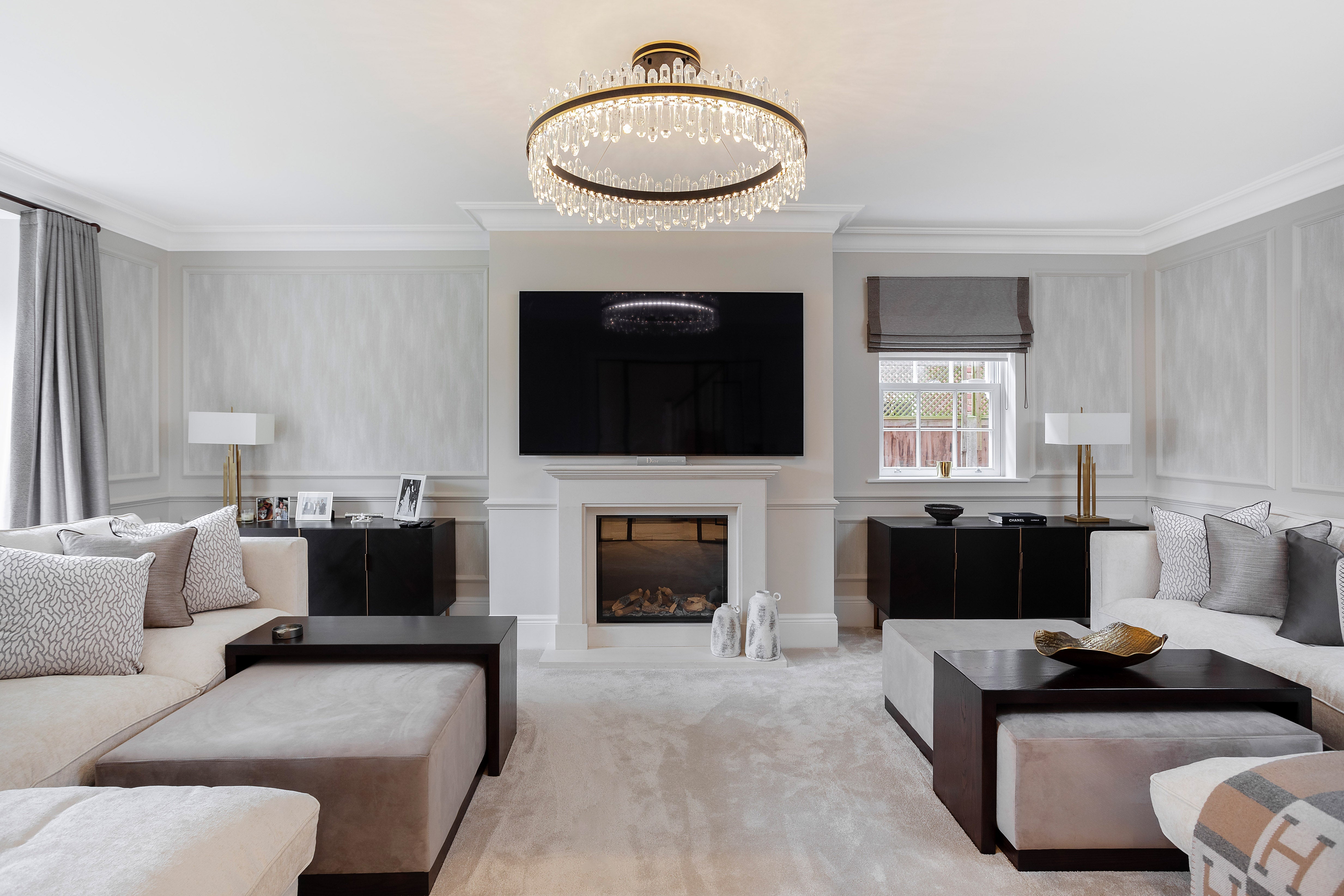
A circular chandelier is usually the strongest choice above a round table, square table or compact breakfast setting. The shape reinforces the table geometry and creates a clear centre point. For larger round tables, the diameter should feel generous enough to anchor the setting without blocking sightlines across the table. Bespoke circular sizes may be appropriate for large private dining rooms.
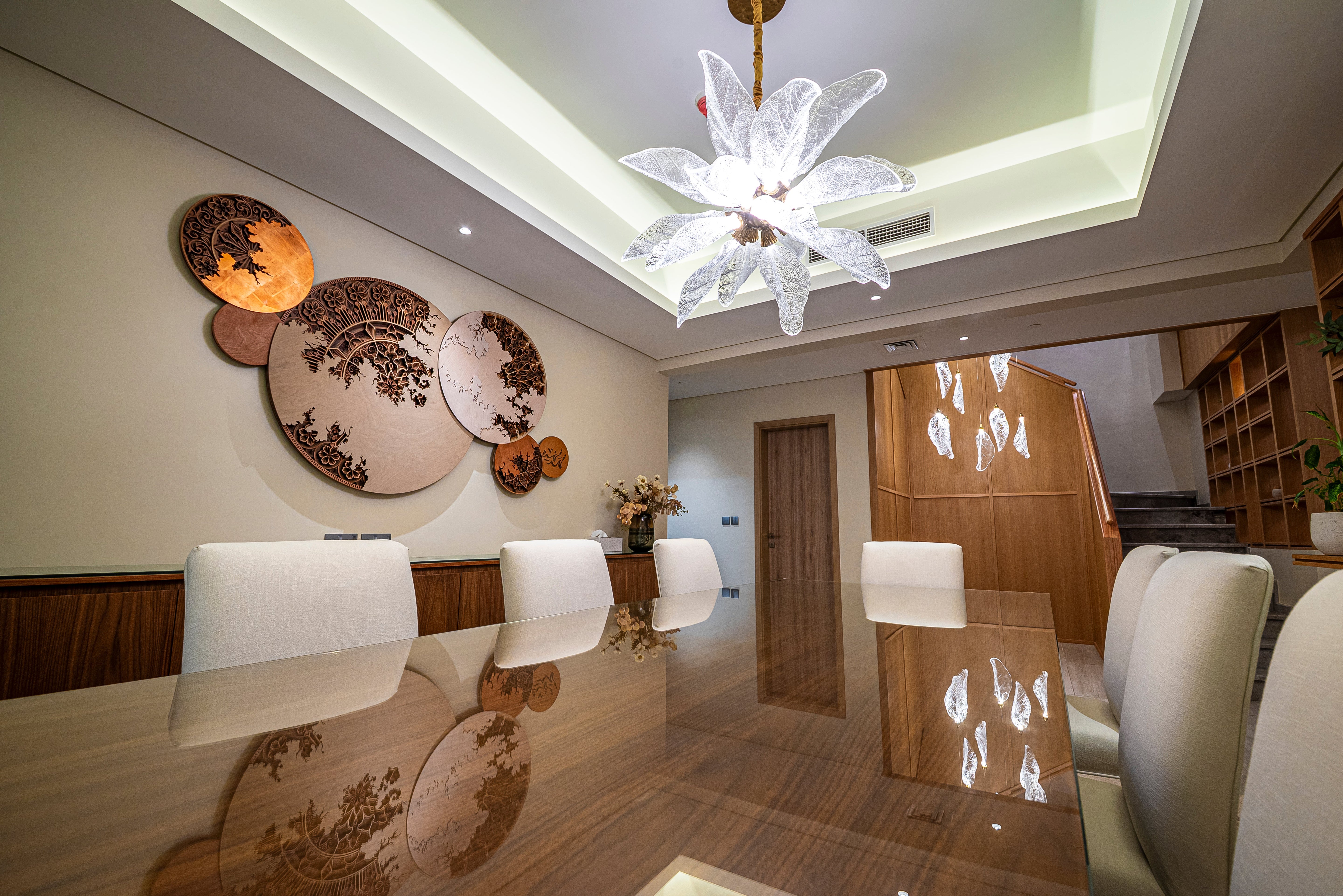
Chandelier hanging height above a dining table is typically around 750–900mm above the finished tabletop. Lower positions create intimacy; higher positions protect sightlines and suit taller guests, larger fittings or hospitality settings. Ceiling height and chandelier depth both matter, so final drop should be checked from the ceiling fixing point to the lowest crystal or component.
Pendant lights for kitchen islands should be spaced from the island centreline, not scattered evenly across the room. Three pendants can work well on medium islands, while longer islands may suit a rectangular chandelier or bespoke linear formation for a cleaner architectural result. The calculator helps decide when a single fitting is stronger than several separate pendants.
Oval dining tables usually need a chandelier that respects the elongated shape without becoming too rigid. A rectangular chandelier, soft linear pendant formation or bespoke oval composition can all work depending on the room. The important point is visual proportion: the chandelier should follow the table's length while leaving enough breathing space at each end.
Open-plan kitchens and dining spaces often need bespoke sizing because the chandelier must relate to furniture, ceiling services, kitchen cabinetry and sightlines at the same time. Bespoke design allows the length, drop, pendant spacing, finish and cable positions to be resolved around the architecture. Review luxury lighting or submit drawings for specification support.
Sizing Questions
Start with the table length, width and shape. A chandelier should usually sit within the table edge, with enough width for presence and enough margin to avoid looking oversized.
For most dining tables, chandelier width or diameter is around half to two-thirds of the table width. Larger luxury spaces may need a broader fitting, but sightlines and ceiling height should still be checked.
Kitchen island chandeliers are usually sized from island length and worktop width. Longer islands often suit rectangular chandeliers, linear pendants or multiple pendants rather than a small central fitting.
Most dining chandeliers hang approximately 750–900mm above the finished tabletop. The exact height depends on ceiling height, chandelier depth, seating position and desired sightlines.
A circular chandelier is usually the most natural choice for a round table because the shapes align. Bespoke or sculptural options can also work when the room calls for a stronger statement.
Rectangular tables usually suit rectangular chandeliers, linear chandeliers or pendant formations because the lighting follows the table's length and keeps the composition balanced.
Three pendants can suit many medium islands, but long or luxury islands may look cleaner with a rectangular chandelier or bespoke linear formation. Spacing should be confirmed from the island length and ceiling plan.
Yes. Bespoke specification is appropriate where the table is oversized, the island is unusually long, the ceiling fixing points are constrained or the finish schedule requires exact coordination.
For dining tables, kitchen islands, private dining rooms and bespoke open-plan interiors, VORELLI® can review furniture dimensions, ceiling structure, sightlines and project intent before final specification.


