



Staircase Width
Measure the widest visible opening of the staircase or staircase void.

Determine the correct chandelier size, drop and fixing position for staircase, entrance hall and double-height spaces. Designed for luxury residential, hospitality, developer and bespoke projects before a chandelier is selected, specified or ordered.
Project Information
If floor plans, staircase layouts, elevations or ceiling drawings are available, upload them for review and the VORELLI® team can assess scale, drop, clearance and fixing position directly.
Measurement Guide
Use the guide below to identify the correct dimensions before calculating your chandelier size. If you already have floor plans, elevations or ceiling drawings, upload them instead and the VORELLI® team can review the specification directly.
Measure the widest visible opening of the staircase or staircase void.

Measure the longest visible dimension of the staircase or void.
Measure from finished floor level to the finished ceiling or highest visible fixing point.
Drop is measured from the ceiling fixing point to the lowest point of the chandelier.
Maintain at least 2200mm clearance from finished floor level or circulation routes.
Position the chandelier through the visual centre of the void, not simply above one tread or handrail.
Choose the closest staircase geometry before using the calculator. This helps the recommendation reflect the way the chandelier will be viewed through the space.
This calculator provides an initial design recommendation. Final chandelier proportions should be reviewed against drawings, ceiling structure, fixing points, sightlines and installation constraints.
For private residences, villas, hospitality spaces and architect-led projects, drawings remain the most reliable way to confirm fixing position, sightlines, chandelier drop and final staircase chandelier dimensions.
Ordering Notes
Private Project Support
Share your staircase dimensions, drawings or elevations and the VORELLI® team can advise on scale, drop, fixing position and style direction.
A reliable staircase chandelier size guide begins with the void, not the fitting alone. Width, length, ceiling height, visible floors and stair geometry determine whether the chandelier should feel central, vertical or deliberately restrained. For most luxury projects, the first decision is proportion: diameter for presence, drop for connection between levels, and clearance for safe movement. Explore staircase chandeliers and luxury chandeliers.
Staircase chandelier dimensions should be checked against the clear stair width, the stair run length and the visual width of the surrounding void. A narrow stairwell may need a slim vertical feature, while a broad entrance hall can support greater diameter. The calculator rounds recommendations into practical luxury sizes, then flags when drawings should guide a bespoke solution.
Staircase chandelier hanging height is primarily a clearance calculation. This tool keeps a 2200mm minimum head clearance, then defines a practical drop range from the remaining ceiling height. In high ceilings and double-height spaces, the ideal drop should connect the upper and lower volumes without obstructing landings, balustrades or principal sightlines. Taller voids may suit long drop chandeliers.
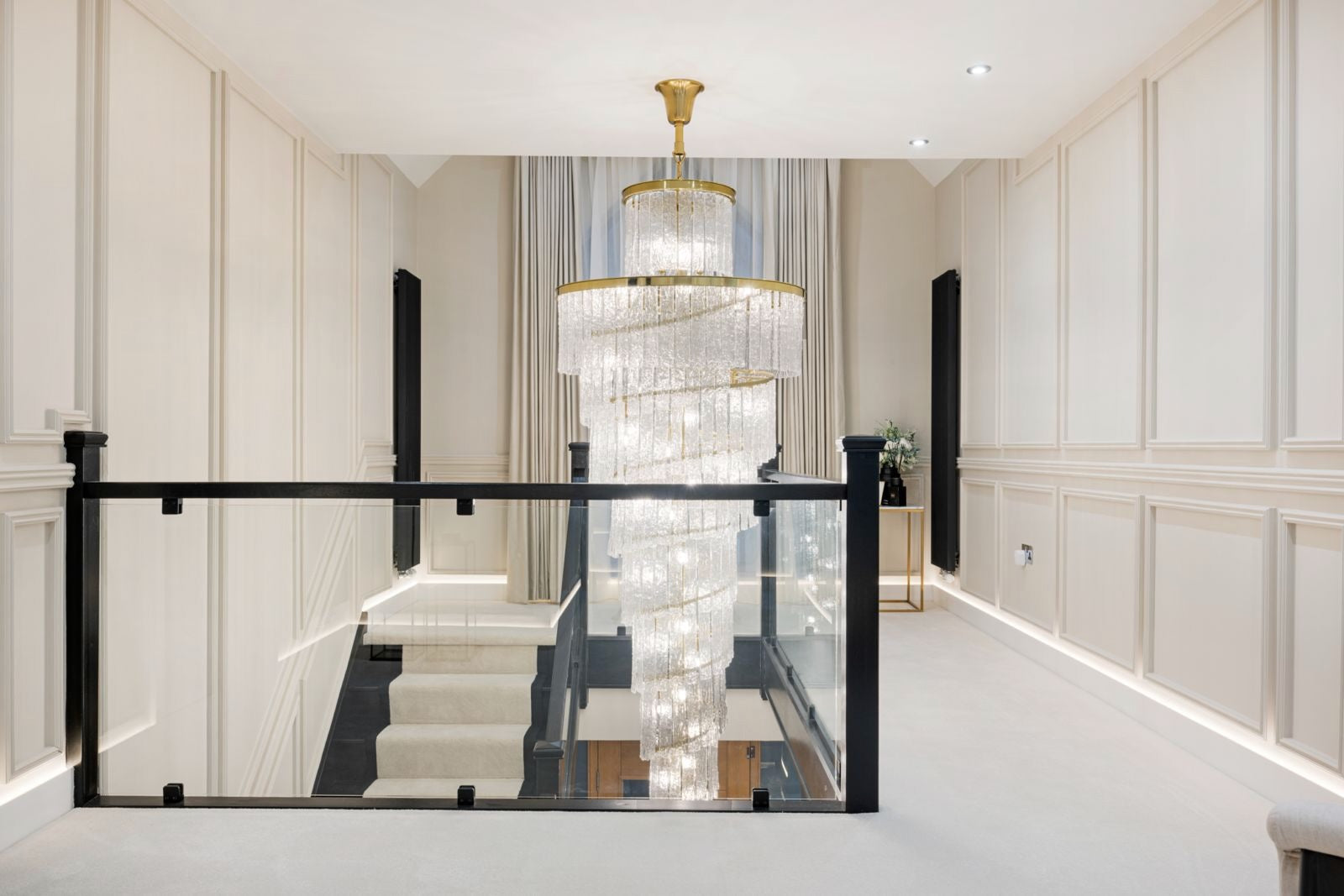
A spiral staircase chandelier suits curved stairs, open voids and spaces where the eye travels vertically between floors. The advantage is movement without unnecessary width: a slim spiral can feel architectural in a narrow stairwell, while a larger spiral can carry a double-height entrance. For exact pendant spacing, suspension points and finishes, consider luxury chandeliers with project-led sizing support.
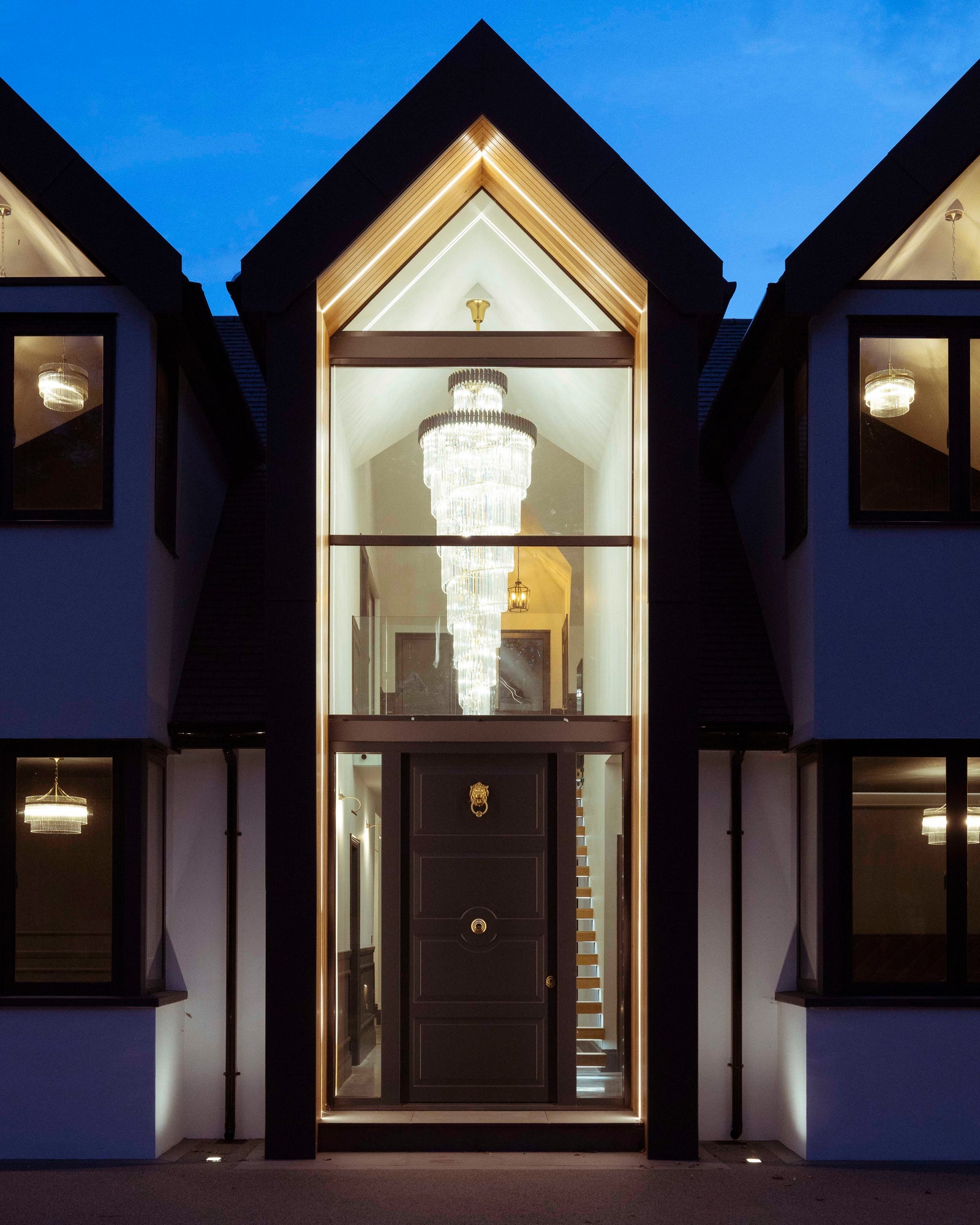
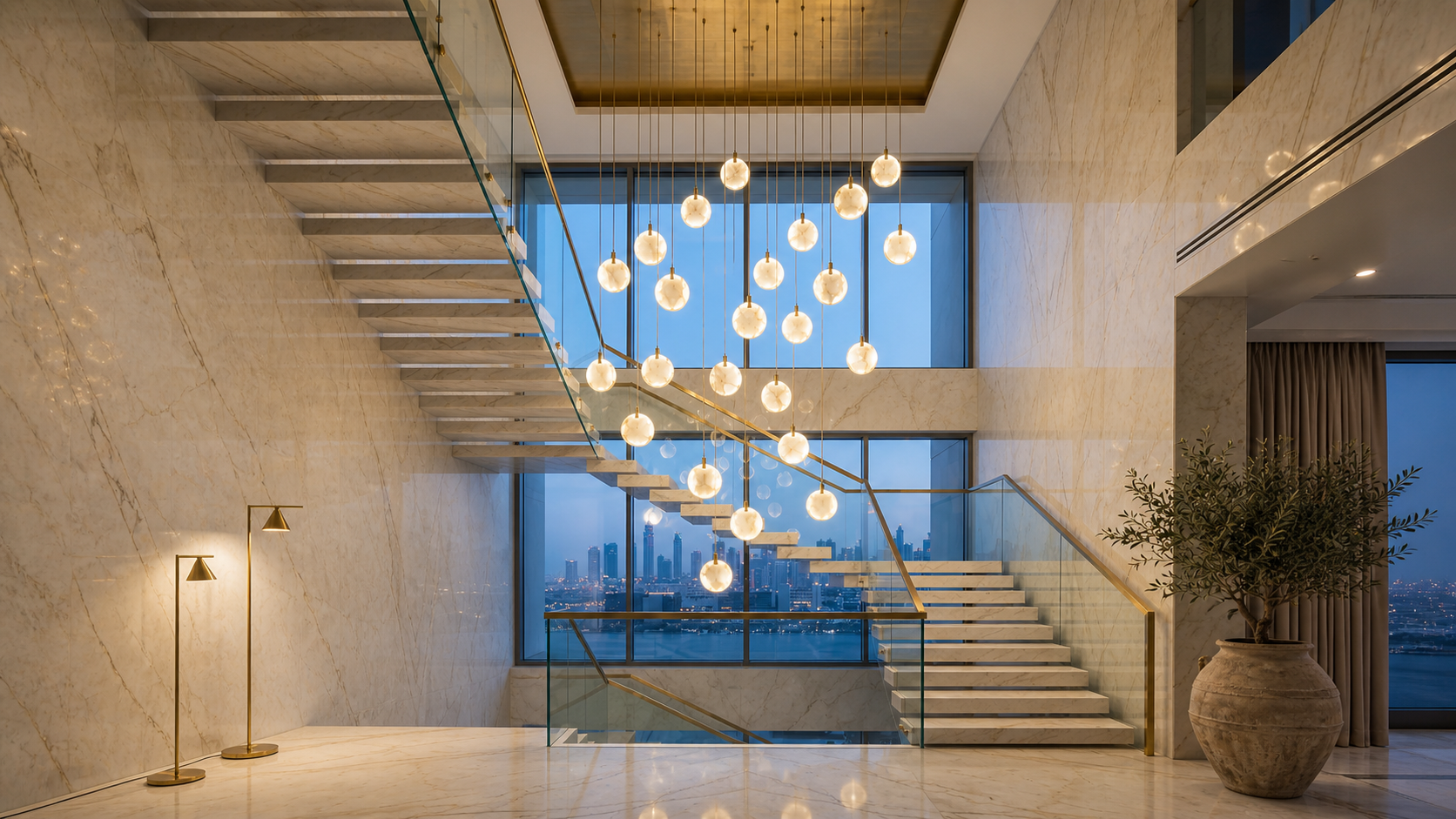
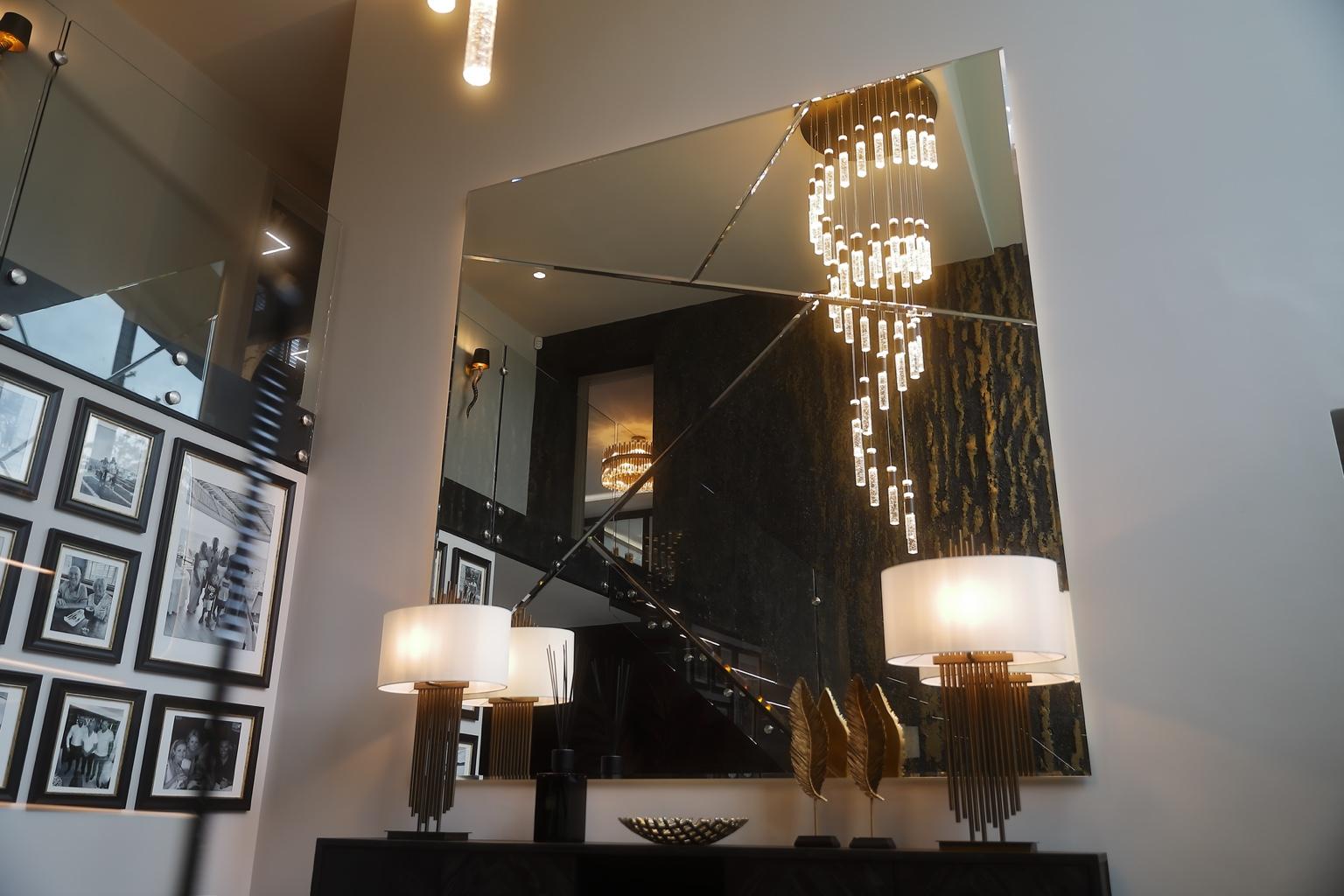
A double height chandelier must be scaled to the full vertical volume, not only the ceiling height. In most staircase or entrance voids, diameter should feel visible from both levels while the drop remains clear of circulation routes below. Spiral, long drop and bespoke vertical compositions are often strongest. View double height chandeliers.
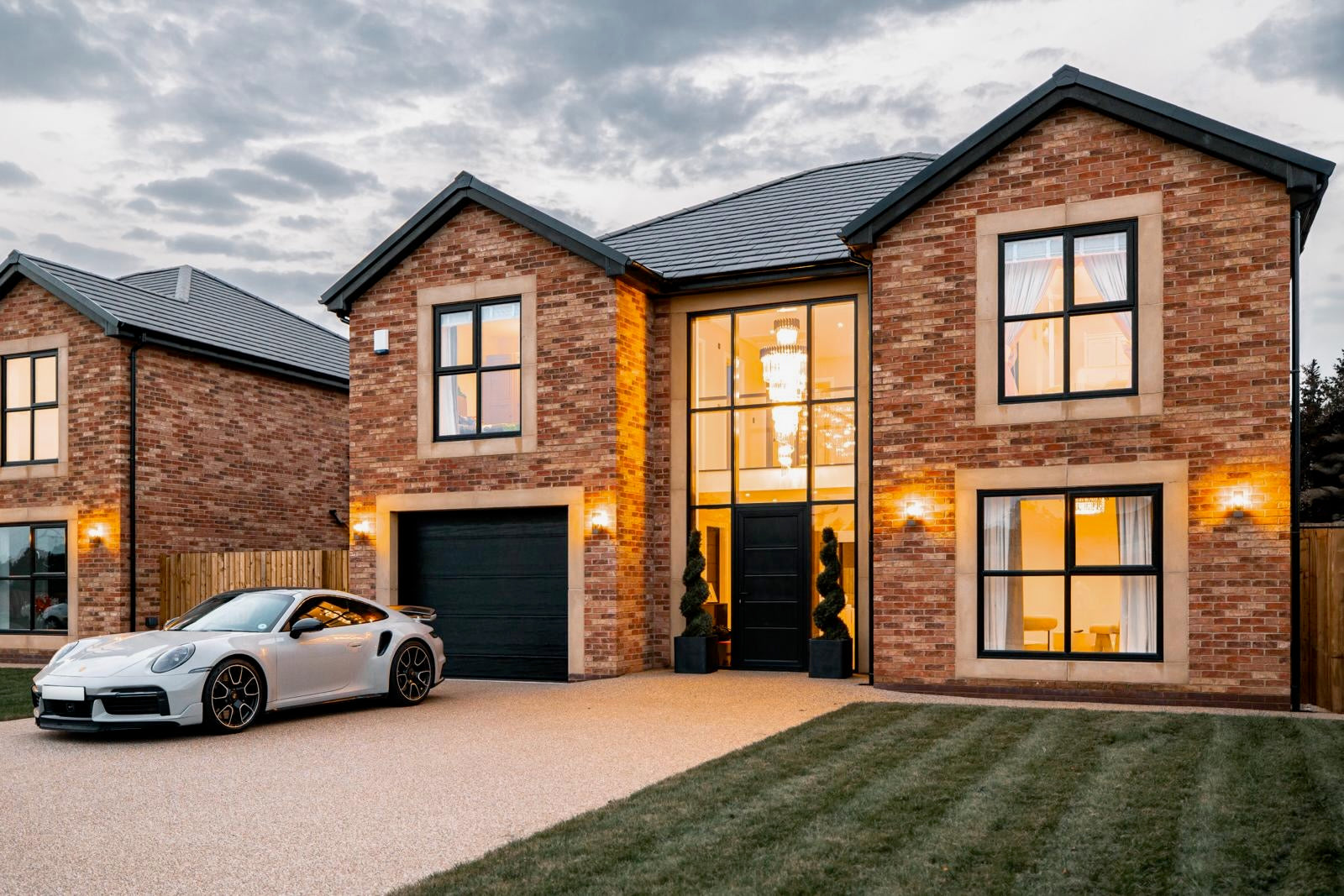
Entrance hall chandelier sizing depends on the first view into the property, the stair position and the relationship between door height, landing lines and ceiling structure. A chandelier should feel centred within the arrival volume, not simply placed in the middle of the floor plan. Broader entrance halls can usually support larger diameter and a more architectural drop.
Foyer chandeliers need enough presence to establish the interior tone immediately, while remaining proportional to door swing, circulation, furniture and sightlines. In luxury residences, villas and hospitality foyers, drawings should confirm the ceiling fixing point, chandelier diameter and lowest finished drop before ordering. For complex foyers, bespoke chandeliers give the cleanest specification route.
A long drop chandelier is usually appropriate where the void is tall enough for vertical rhythm and the lowest point can remain clear of movement below. The calculator uses the 2200mm clearance rule to define the maximum drop, then recommends a practical range for staircases, stairwells and high-ceiling interiors. Longer cable, chain or bespoke suspension may be required for larger projects.
High ceiling chandeliers should be specified from the finished ceiling or fixing point down to the intended lowest visible component. In tall stairwells, the drop often matters more than diameter because the chandelier must connect the upper and lower spaces. Where the void exceeds two floors, use drawings to review structure, access, pendant spacing and maintenance.
Chandelier positioning in a double-height void should follow the visual centre of the space, not only the stair tread, handrail or geometric centre of one floor. Review the principal arrival view, upper landing view and stair ascent together. The strongest result is usually a suspended composition aligned to the architectural volume and checked against ceiling services.
Bespoke staircase chandeliers are appropriate when the fixing point is offset, the ceiling detail is complex, the void spans multiple floors or the finish schedule is exacting. Bespoke design allows diameter, drop, cable positions, pendant spacing and finish to be resolved around the architecture rather than forced into a standard size. View luxury lighting or submit drawings for specification support.
Sizing questions
The best size depends on stair width, stair length, ceiling height and the number of visible floors. The calculator estimates diameter from width and length, then rounds into sensible luxury sizes.
It should hang low enough to connect the void visually, while maintaining at least 2200mm clearance from finished floor level or circulation routes.
Allow a minimum of 2200mm from the lowest point of the chandelier to the finished floor or main circulation route. Larger projects should also review balustrades, landings and maintenance access.
Yes. A chandelier can hang through multiple floors when the void has sufficient height, clearance and structural support. Spiral and long drop chandeliers are often selected for this use.
Spiral chandeliers suit vertical stairwells, linear chandeliers suit longer stair runs, circular chandeliers suit broader entrance spaces and bespoke chandeliers suit exact architectural constraints.
Review the full void height, staircase width, staircase length, viewing angles and balance between diameter and drop. A 900mm to 1200mm diameter range is often a strong starting point where the stair width allows.
Yes. Layouts, elevations, ceiling plans and reference images help confirm diameter, drop height, suspension position and installation constraints before final specification.
For staircase chandeliers, long drop installations and bespoke double-height features, VORELLI® can review drawings, ceiling structure, viewing angles and project intent before final specification.